
Walking into Monkey Forest Ubud can feel like stepping into another world by following the rules. The streets around Ubud are busy, but inside the forest everything becomes greener and quieter. Then you notice the monkeys. One is sitting beside the path, another is climbing a tree, and a third may suddenly walk across in front of you. It is exciting, but it is also the moment when you need to remember that these are not pets in a zoo. They are semi-wild animals living in their own environment.
>> Read also: Things to Do Near Monkey Forest Ubud
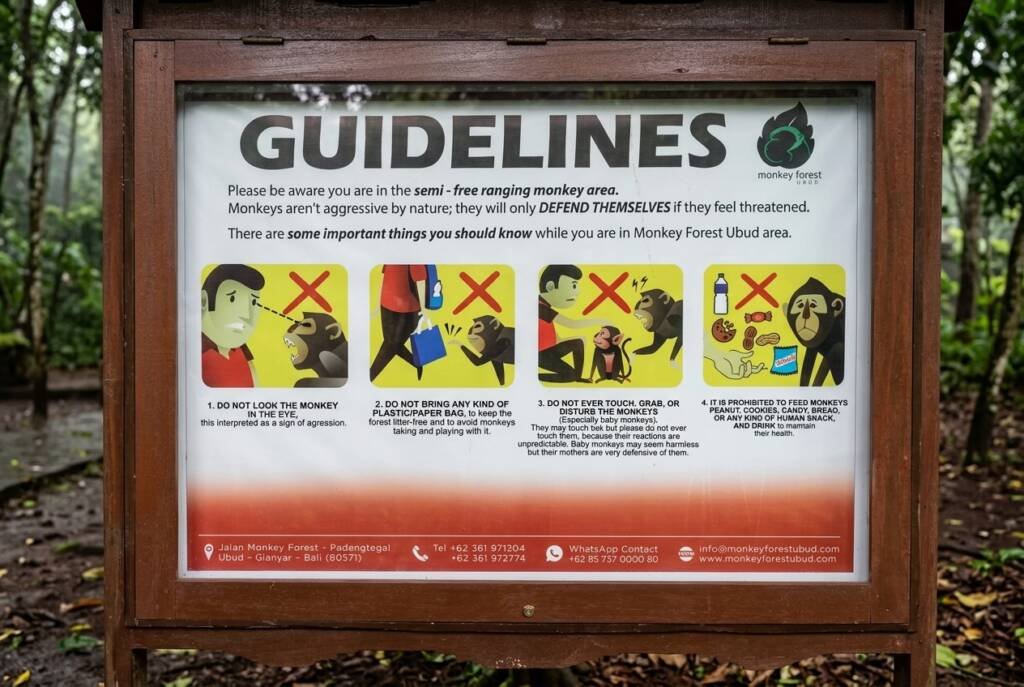
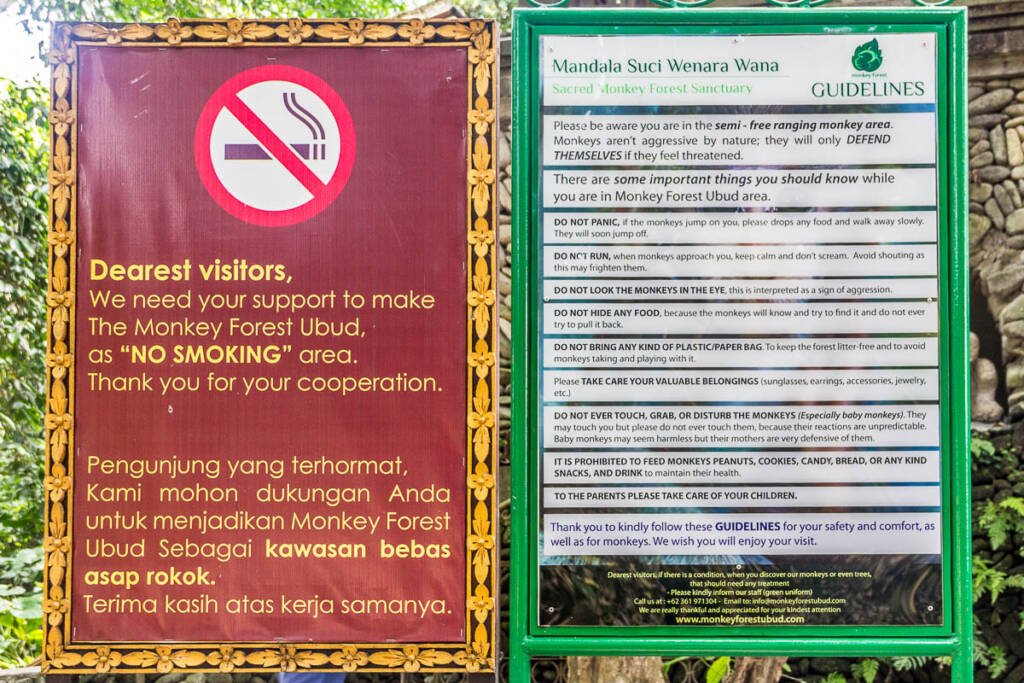
Knowing the Monkey Forest Ubud rules before your visit can make the experience safer, more comfortable and much more enjoyable. Most of the rules are simple: do not feed the monkeys, do not touch them, keep your belongings secure, avoid provoking them and follow instructions from the sanctuary staff. The rules are not there to make the visit less fun. They help protect visitors, the animals and the forest itself.
Treat the monkeys as wild animals rather than friendly pets. Give them space, stay calm and let them behave naturally without trying to attract their attention.
Why Does Monkey Forest Ubud Have Rules?
It is easy to forget the difference between a wildlife sanctuary and an ordinary tourist attraction when you see monkeys sitting comfortably around visitors. The macaques at Monkey Forest Ubud are accustomed to seeing people, but that does not mean they are domesticated. Their behavior can change depending on the situation, their social group and what is happening around them.
The sanctuary is also much more than a place to see monkeys. The forest is part of a sacred cultural landscape in Padangtegal, Ubud, and includes temple areas, traditional architecture and natural forest. Visitors are therefore entering a place where wildlife, nature, local community traditions and Balinese spirituality exist together.
The best way to experience the monkeys is to observe them calmly from a respectful distance.
Monkey Forest Ubud Rules You Should Know
The basic rules are easy to remember, but they are important. Before entering the forest, take a moment to understand them, especially if you are traveling with children or visiting Bali for the first time.
| Rule | What You Should Do |
|---|---|
| Do not feed the monkeys | Keep food out of the forest and never try to attract a monkey with something to eat. |
| Do not touch the monkeys | Observe them without trying to pet, hold or physically interact with them. |
| Keep your belongings secure | Hold onto glasses, phones, hats, bags and other small items that could attract a curious monkey. |
| Do not provoke the monkeys | Avoid chasing, shouting at, cornering or teasing them. |
| Avoid direct eye contact | Do not stare directly at a monkey, especially when it is close to you. |
| Stay calm | If a monkey approaches, do not panic or run. Give it space and follow staff instructions. |
| Follow staff instructions | Sanctuary staff know the animals and the area, so listen when they give directions. |
| Respect the sacred areas | Remember that the forest includes important religious and cultural sites. |
Can You Feed the Monkeys at Monkey Forest Ubud?
No. Visitors should not feed the monkeys. This is one of the most important Monkey Forest Ubud rules because food can change animal behavior and encourage monkeys to approach people more aggressively. Even if a monkey looks curious or friendly, offering food is not a good idea.
You may see monkeys interacting with food provided by sanctuary staff. That is different from visitors feeding them. The sanctuary manages feeding as part of its animal care and management practices. As a visitor, your role is simply to observe.
It might seem like an easy way to make a monkey look toward your camera, but it can encourage unwanted behavior and put you closer to the animal than is comfortable.
Can You Touch the Monkeys?
It is best not to touch the monkeys, even when they appear calm. A monkey sitting quietly beside the path may suddenly react if someone reaches toward it. Remember that you are entering its environment, so the safest approach is to let the animal decide how close it wants to be.
This is particularly important when taking photographs. A close-up photograph is not worth putting yourself or the monkey in an uncomfortable situation. Use your camera’s zoom when necessary and give the animals enough room to move freely.
What Should You Do If a Monkey Comes Close?
This is probably the question many first-time visitors have in the back of their mind. What happens if a monkey walks directly toward you? The most important thing is not to panic. Do not scream, chase it away or suddenly run.
Stay calm, avoid direct eye contact and slowly create some distance if necessary. If you are carrying something that has attracted the monkey’s attention, follow the instructions given by sanctuary staff. Staff members are familiar with the animals and can help if a situation becomes uncomfortable.
Before entering the forest, put away anything you do not need. Secure your phone, sunglasses, loose food packaging and other small belongings. A simple five-second check can save you a lot of trouble later.
What Belongings Should You Be Careful With?
Monkeys are naturally curious, and small objects can become interesting to them. Sunglasses, hats, phones, bottles, plastic bags and other loose items should be kept secure. Avoid leaving belongings hanging loosely where a monkey could easily grab them.
This does not mean you need to be nervous about every monkey you see. Most visitors can enjoy the forest without problems by simply paying attention to their surroundings. The key is to remember that a monkey may not understand that your phone or sunglasses are valuable to you.
Monkey Forest Ubud Rules for Photography
Photography is one of the reasons many travelers visit Monkey Forest, and there are plenty of beautiful moments to capture. The best photographs usually come from patience rather than interaction. Watch the animals for a while and you may see grooming, climbing, resting or playful behavior that happens naturally.
Avoid using flash if it disturbs the animal, and never move toward a monkey simply because you want a closer photograph. If the animal walks away, let it go. You can always photograph another moment.
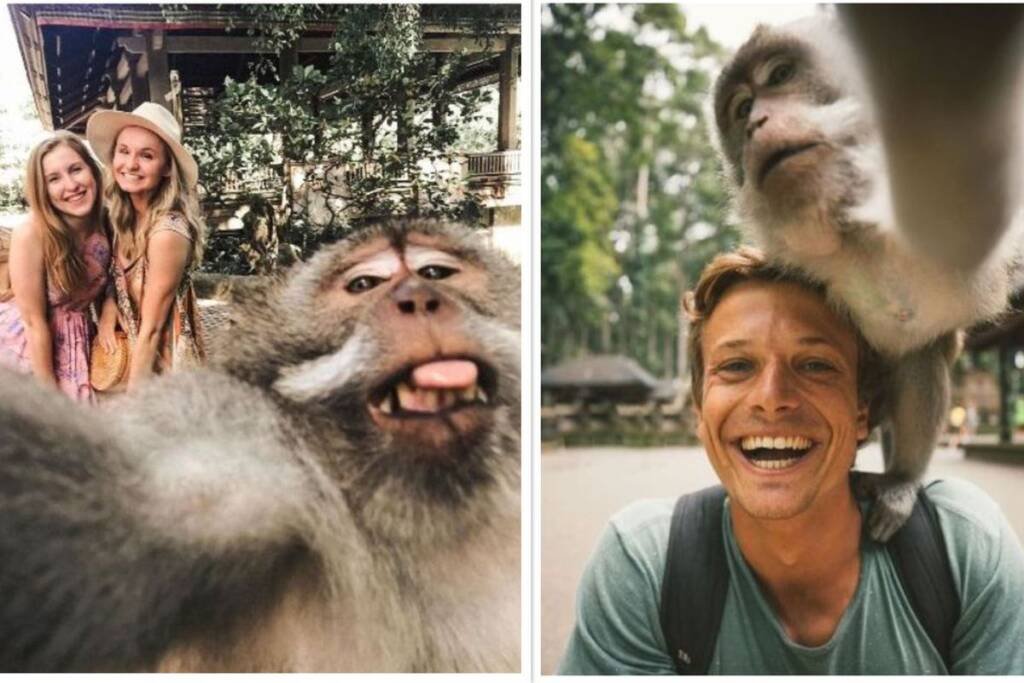
Natural behavior usually makes a better travel memory than a forced interaction.
Are Monkey Forest Ubud Rules Important for Children?
Absolutely. Monkey Forest can be a fascinating experience for children because they get to see animals moving freely through a forest rather than behind traditional zoo enclosures. At the same time, children may naturally want to touch or approach the monkeys, so parents should explain the rules before entering.
A simple explanation is enough: watch the monkeys, don’t touch them, don’t feed them and don’t chase them. If a monkey comes close, stay calm and tell an adult. Keeping the rules simple makes it easier for children to remember them while they are enjoying the experience.
What Should You Not Bring Into Monkey Forest?
The safest approach is to bring only what you actually need. Food and drinks should not be taken into the forest, and loose items should be secured. Before entering, check your pockets and bags so there is nothing unnecessary that could become interesting to a curious monkey.
You should also avoid bringing anything specifically to attract the monkeys. The goal of visiting is to observe their natural behavior, not to create an interaction for a photograph or social media video.
Respect the Sacred Side of Monkey Forest Ubud
One detail that is sometimes overlooked by first-time visitors is that Monkey Forest is also an important cultural and spiritual place. The forest contains temple areas and sacred spaces connected with the local community. It is therefore important to behave respectfully, especially when walking near religious structures.
Dress comfortably but appropriately, avoid disturbing ceremonies and follow any signs or instructions around sacred areas. You are not simply walking through a green park. You are visiting a place that has cultural meaning for the Balinese community.
What If a Monkey Jumps on You?
If a monkey suddenly climbs onto you, try not to panic. Do not hit or aggressively push the animal. Stay calm and follow the instructions of the sanctuary staff. If you are carrying food or another item that has attracted the monkey, staff can help you deal with the situation safely.
This is one reason why listening to the staff is more useful than relying on random advice from social media. The people working inside the sanctuary understand the environment and can respond according to what is happening at that moment.
Is Monkey Forest Ubud Safe?
Monkey Forest Ubud can be enjoyed safely when visitors respect the rules and understand that the animals are semi-wild. Most of the basic precautions are common sense: do not feed the monkeys, do not touch them, secure your belongings, avoid provoking them and listen to staff.
The biggest mistake is treating the monkeys like friendly pets simply because they are accustomed to visitors. Giving them space is one of the easiest ways to make the experience better for everyone.
A Relaxed Way to Visit Monkey Forest Ubud
If you are visiting Ubud for the first time, I recommend avoiding the temptation to pack too many attractions into one day. Monkey Forest can be combined with other places around Ubud, but leave enough time to actually enjoy each stop.
A private Ubud tour can be useful here because the route can be adjusted around your interests. You might visit Monkey Forest in the morning, stop for lunch, then continue toward a temple, rice terrace or waterfall. With a local driver like Andra, you can also adjust the schedule if you decide that you want to stay longer somewhere.
Nagiku Bali Tour offers private Bali tours with an experienced driver, comfortable air-conditioned transportation, and flexible itineraries. You can chat directly with Andra on WhatsApp at +62 812-3456-6134 to organize a smooth, personalized itinerary around Ubud at your own pace.
Planning to Visit Monkey Forest Ubud?
If Monkey Forest is on your Bali itinerary, we can help arrange a private Ubud day tour with hotel pickup and a flexible route. You can combine Monkey Forest with other Ubud attractions depending on your interests and available time.
Send your hotel location, travel date, and preferred destinations directly to Andra on WhatsApp at +62 812-3456-6134, and Nagiku Bali Tour will help set up a seamless route for your day.
Chat Andra on WhatsAppFrequently Asked Questions
Can I feed the monkeys at Monkey Forest Ubud?
No. Visitors should not feed the monkeys. Feeding is managed by sanctuary staff, and visitors should observe the animals without offering food.
Can I touch the monkeys at Monkey Forest Ubud?
No. Visitors should not touch the monkeys. They are semi-wild animals and should be observed from a respectful distance.
What should I do if a monkey approaches me?
Stay calm, avoid direct eye contact, do not run or provoke the animal, and follow the instructions of sanctuary staff.
Can children visit Monkey Forest Ubud?
Yes. Children can enjoy the sanctuary, but they should be supervised and taught not to touch, feed or chase the monkeys.
Can I take photos of the monkeys?
Yes. Photography is possible, but visitors should maintain a safe distance and avoid using food or other objects to attract the monkeys.
Is Monkey Forest Ubud safe?
The sanctuary can be enjoyed safely when visitors follow the rules, respect the animals, secure their belongings and listen to staff instructions.
Visitor rules and operating procedures can change. Always follow the latest instructions displayed by Monkey Forest Ubud and its staff when you arrive.