When planning an Ubud day trip itinerary, it is tempting to add as many attractions as possible. I understand that feeling because most visitors want to make the most of their holiday. However, after years of driving visitors around Ubud and other parts of Bali, I have learned that a full Ubud day trip itinerary does not always mean a better travel experience.

As an experienced Ubud tour driver, I sometimes suggest removing one or two destinations from a guest’s original plan. It might sound strange when someone has already chosen the places they want to visit, but my intention is simple: I would rather help guests enjoy five places properly than rush through eight or nine without having enough time to appreciate them.
There is a big difference between visiting a destination and actually experiencing it. Driving, walking, taking photographs, having lunch, and dealing with traffic all take time that is easy to overlook when planning a tour from a map.
1. Driving Between Attractions Takes More Time Than Expected
One common mistake when planning an Ubud day trip itinerary is looking only at the distance between attractions. Two places may appear close on Google Maps, but the actual journey can take longer because of narrow village roads, local activities, road conditions, and traffic around popular tourist areas.
For example, a journey from central Ubud to Tegallalang might look relatively short. However, if you visit several attractions along the way, stop for photographs, or travel during busy hours, the time spent moving between destinations can quickly add up.

| Activity | Estimated Time | What to Consider |
|---|---|---|
| Driving between nearby attractions | 15–30 minutes | Depends on road conditions and traffic. |
| Driving to another tourist area | 30–60 minutes | Allow extra time during busy periods. |
| Parking and getting ready | 5–15 minutes | Some attractions require additional walking. |
| Returning to the hotel | 30–60 minutes or more | Consider afternoon traffic. |
These are planning estimates, not fixed travel times. A good Ubud day trip itinerary should have some flexibility rather than assuming every journey will go exactly as planned.
2. Walking Around Attractions Requires Enough Time
Another thing visitors sometimes underestimate is how much walking is involved. Some Bali attractions look small on a photograph, but exploring them properly can involve stairs, uneven paths, temple courtyards, rice terrace trails, or walking between different viewpoints.
At places such as the Sacred Monkey Forest Sanctuary, guests may want to explore the forest paths instead of simply entering, taking one photograph, and leaving. The same applies to waterfalls, where reaching the viewpoint or swimming area can involve walking down and back up a number of steps.

3. Photography Should Not Feel Like a Race
For many international visitors, taking photographs is an important part of travelling in Bali. A beautiful rice terrace, traditional Balinese temple, waterfall, or countryside viewpoint may be something they have been looking forward to for months.
But photography takes time. Guests may need to find a good angle, wait for other visitors to move, change locations, or simply enjoy the scenery before taking their next picture. If the schedule is too tight, even a beautiful destination can become just another rushed stop.
I have seen how different the atmosphere becomes when guests have enough time. Instead of immediately asking how long they can stay, they can relax, explore different viewpoints, and enjoy the moment.

4. Lunch and Rest Should Be Part of the Ubud day trip itinerary
Some itineraries look impressive because they contain many destinations, but they leave very little time for meals. I don’t think this is a good way to spend a holiday, especially when guests are travelling with children, older family members, or anyone who prefers a more relaxed pace.
Lunch in Bali does not have to be a long restaurant experience, but it should not feel like another task that must be completed in ten minutes. Guests may want to try local food, enjoy a view, have a coffee, or simply sit down after walking around in the heat.
| Part of the Day | Suggested Time | Purpose |
|---|---|---|
| Breakfast before pickup | Before departure | Start the day comfortably. |
| Morning sightseeing | 2–3 hours | Explore the first attractions. |
| Lunch break | 45–75 minutes | Eat and take a proper rest. |
| Afternoon sightseeing | 2–3 hours | Enjoy the remaining destinations. |
| Return journey | Depends on location | Allow flexibility for traffic. |
This is only a general example. The right schedule depends on the pickup location, attraction distances, guest preferences, and the time of year.
5. Traffic Can Change the Whole Plan
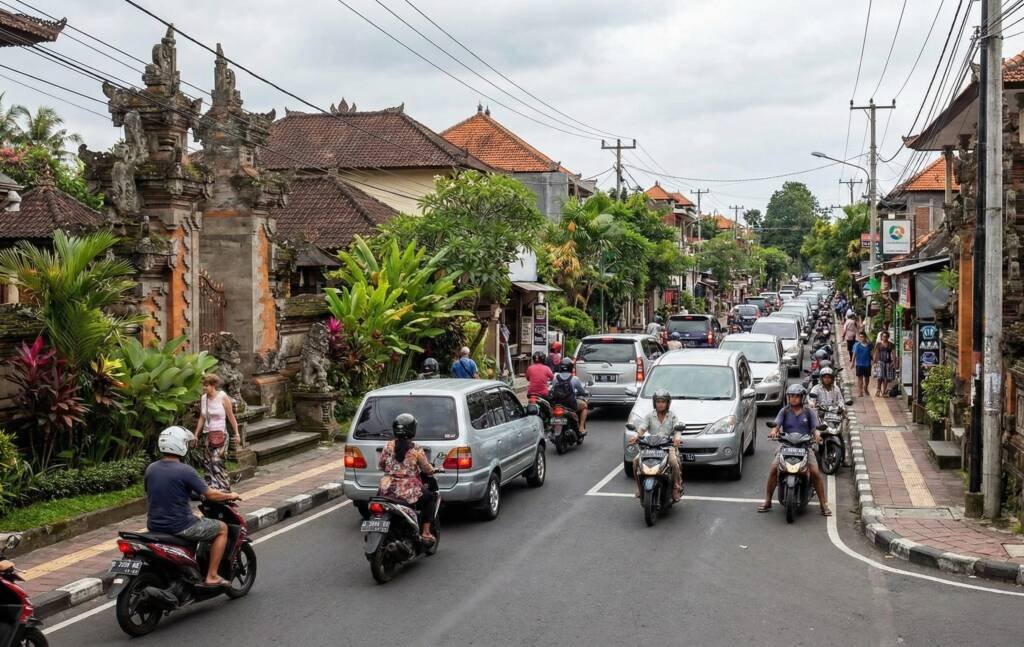
Bali traffic is not always predictable. Popular places around Ubud, Tegallalang, and other tourist areas can become busy, especially during peak holiday periods and certain hours of the day.
When traffic is heavier than expected, a schedule with too many stops becomes difficult to maintain. Guests may have to shorten their visits, skip lunch, or arrive at the final attraction later than planned. As a local driver, I prefer to leave some room for these situations rather than promise an itinerary that only works when everything goes perfectly.
6. Realistic vs Overloaded Bali Day Tour Itineraries
To explain the difference, here are two examples of a day tour starting from central Ubud. Both itineraries include popular places, but the experience can be very different depending on how much time is allocated to each stop.
Example A: A More Comfortable Ubud Day Tour
| Time | Destination / Activity | Estimated Duration |
|---|---|---|
| 08:30 | Hotel pickup | 15 minutes |
| 09:00 | Tegallalang Rice Terrace | 60 minutes |
| 10:30 | Local temple visit | 45 minutes |
| 12:00 | Lunch break | 60 minutes |
| 13:30 | Ubud Monkey Forest | 75 minutes |
| 15:15 | Ubud town and local shopping | 60 minutes |
| 16:30 | Return to hotel | Flexible |
This itinerary has a reasonable number of attractions and allows time for meals, walking, and photography. Depending on traffic and the exact hotel location, the return time may change, but the overall schedule is easier to manage.
Example B: An Overloaded Ubud Day Tour
| Time | Destination / Activity | Planning Problem |
|---|---|---|
| 08:00 | Tegallalang Rice Terrace | Very short visit |
| 09:00 | Waterfall | Walking and changing time overlooked |
| 10:15 | Temple | Limited exploration |
| 11:15 | Coffee plantation | Another short stop |
| 12:00 | Lunch | Little flexibility |
| 13:00 | Monkey Forest | Not enough exploration time |
| 14:00 | Ubud Palace | Traffic and parking delays |
| 15:00 | Art market | Shopping feels rushed |
| 16:00 | Another waterfall | Potentially unrealistic timing |
| 17:00 | Return to hotel | Schedule may already be delayed |
The second itinerary may look attractive because it includes more places. However, it leaves very little room for unexpected traffic, longer walking routes, photography, or guests who simply want to spend more time somewhere they enjoy.
7. Choose Destinations That Make Sense Together
Rather than selecting attractions only because they are popular, I recommend grouping destinations based on their geographical location. This can reduce unnecessary driving and make the journey feel more natural.
For example, a northern Ubud day trip itinerary can include Tegallalang Rice Terrace, nearby countryside attractions, and selected temples. Another day can focus on central Ubud, including the Monkey Forest, Ubud Palace, and nearby cultural spots.
If you are interested in exploring places outside Ubud, it may be better to dedicate another day to a different region instead of combining too many distant destinations into one trip. You can also explore our North Bali tour for a different sightseeing experience.

8. What I Recommend When Hiring a Private Driver in Ubud
If you are planning a private tour, don’t be afraid to discuss your itinerary before the travel date. A good Ubud private driver should be able to explain which destinations are convenient to combine, where additional travel time may be needed, and which stops might make the schedule too demanding.
At Nagiku Bali, we believe a tour should be planned around the guests’ interests and available time. We would rather discuss a practical route in advance than create expectations that are difficult to meet on the actual day.
Here are a few things I suggest considering when arranging your private driver:
- Choose the destinations you genuinely want to visit rather than collecting as many places as possible.
- Consider the distance and direction between attractions.
- Allow enough time for walking, photographs, and meals.
- Tell your driver if you prefer a relaxed tour or a more active sightseeing day.
- Keep one flexible time slot in case you want to stay longer somewhere.
You can learn more about our Ubud private day tour if you are considering exploring the area with a local driver.
Final Thoughts: Enjoy the Journey, Not Just the Number of Stops
After spending years driving around Ubud and other parts of Bali, my opinion is quite simple: a good day tour should not feel like a race against time. The best memories often come from having enough time to enjoy a beautiful place, discover something unexpected, or sit down for lunch without worrying about the next destination.
There is nothing wrong with visiting several attractions in one day, especially if they are close to each other. But adding more stops does not automatically make a tour better. Sometimes, removing two destinations can make the entire experience much more enjoyable.
Enjoy Bali at Your Own Pace
Planning to explore Ubud and other beautiful destinations in Bali? Let us help you arrange a comfortable day tour with a local driver. Share the places you would like to visit, and we can help suggest a practical route that gives you enough time to enjoy each destination.
At Nagiku Bali Tour, we believe a memorable journey is not about visiting as many places as possible, but about enjoying every moment along the way.